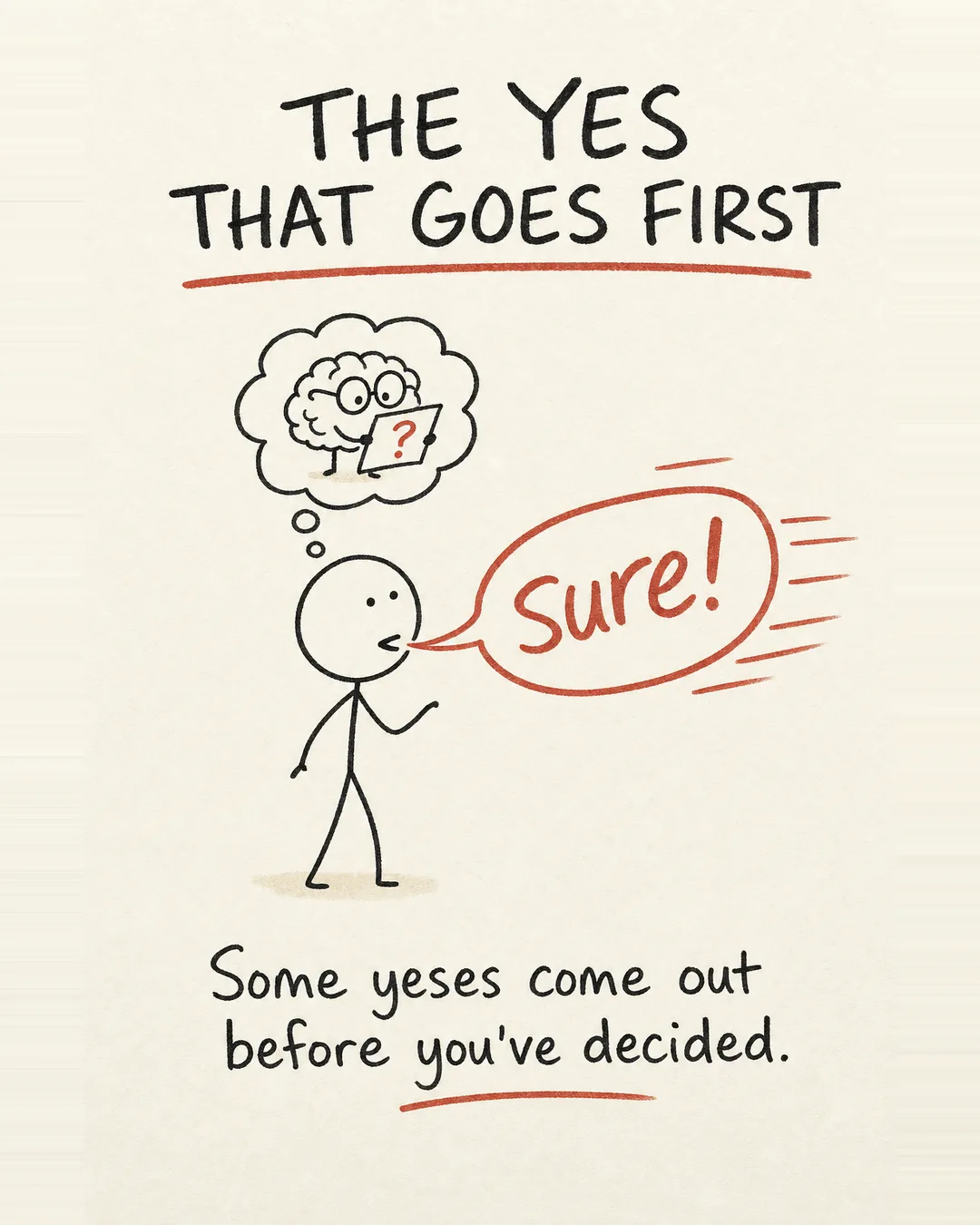
Someone asked. You heard yourself say "sure." You hadn't decided yet...
Say No To The Person Who Keeps Asking - And Still Mean It When They Ask Again
Find out why the yes comes out first. Then, when you're ready, say the no out loud to an AI stand-in that pushes back with their usual lines, before you say it for real.
$15, one time. About half an hour on your phone tonight. 30 days to get everything back, no questions.
Get my no ready30 days, everything back. No form, no questions.
No thanks, I'll say yes and deal with it later.
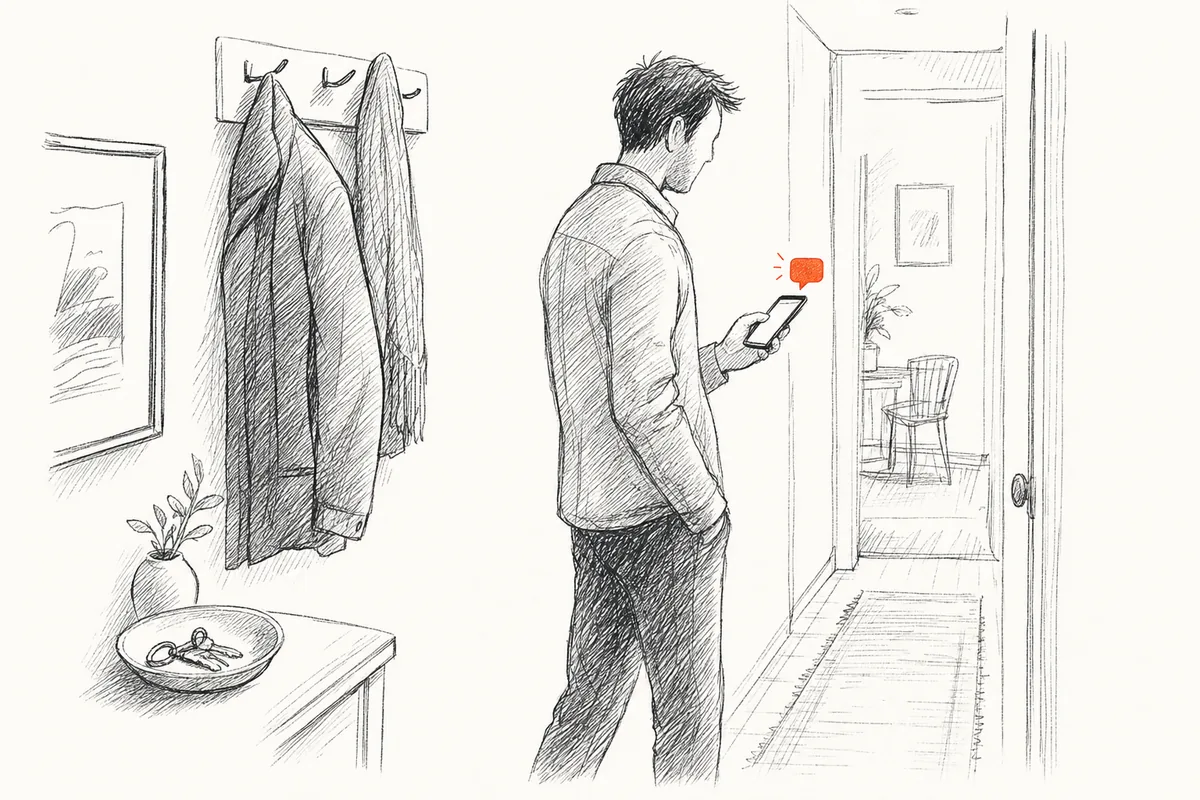
You already know how to say no. Just not to them.
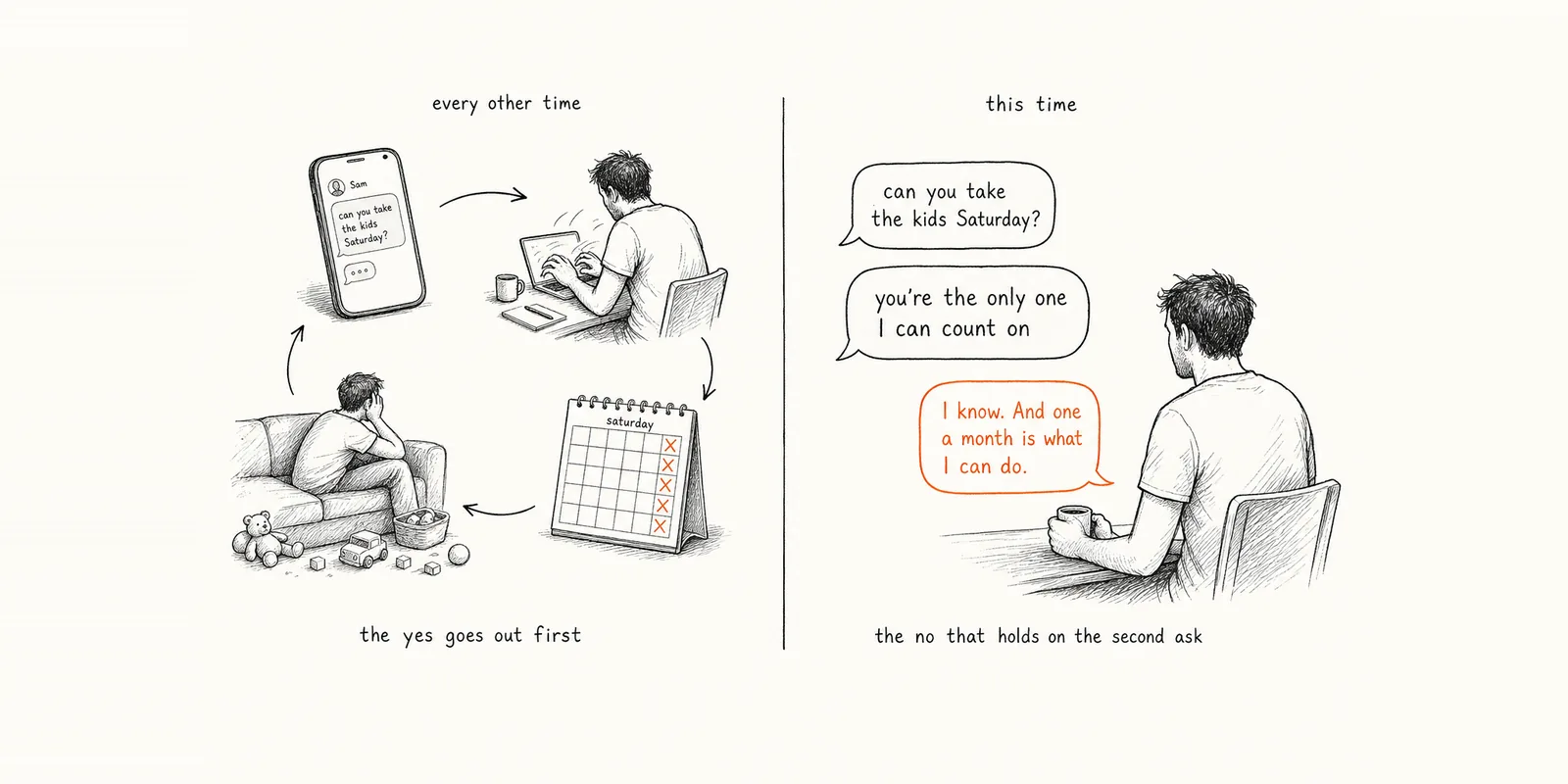
Your sister texts "can you take the kids Saturday?" and you've typed "sure!" before you've finished reading. Your boss says "one more thing" at 6:05 and you hear yourself say "no problem." You rehearsed the no in the car, word for word, and on the phone it came out as "yeah, of course."
That's not because you don't know how.
You say no to strangers all the time: the sales call, the upgrade at the checkout. It's the people close to you, the ones who know you, that the yes comes out for, before you've decided anything.
Not for you if: someone is hurting you, or you're afraid of what they'll do if you say no. Then you need a person, not an app. If something you say sounds unsafe, it asks you once, and if you're not safe it stops and points you to real help. Also not for you if what you want is a way out of it without actually saying no. This is one no, to one person, said straight.
The next ask is already on its way
You've tried "let me think about it," and then did it anyway. You've read that "no" is a complete sentence, and then added four reasons. You've let ChatGPT write the kind, firm message, which felt like progress at 11pm and was still sitting in your drafts in the morning.
None of it held, because none of it touched two things. A no rarely breaks on the first sentence. It breaks on the second ask: "but you're the only one I can count on," "just this once," "I thought I could rely on you." That's the moment an old rule decides your reason isn't good enough, and takes the no back for you. And you've never once said the no out loud to someone who pushes the way they push.
So "for a while" turns into three months, one favor turns into every Saturday, and nobody mentions the loan at dinner anymore. Every automatic yes is a little more of your week, decided without you - and every month it waits, the no gets bigger to say.
And slowly you become the one it always falls to.
Here's what actually changes that.
Not another PDF you'll never read
Most of what's out there about saying no hands you something to read. This takes you through your own ask, one question at a time.
What's usually out there
- A PDF or a worksheet you download and never open twice.
- An article with ten polite ways to say no.
- A quiz that gives you a type, and stops there.
- A chat that makes your no sound nicer, and never asks how it went.
Actually, No
- Guided. One question at a time, always with options. Never a blank page.
- Interactive. It reads the ask back to you, and you correct it.
- Personal. Built from your words and the person who asks, not from a template.
- Said out loud, three times. When you're ready, you say your no and it asks again the way they do. Then again, with them tired. Then with the line that usually gets you.
- It comes back, and checks. The day after, it asks how it went. At day 7 and day 28, one tap: has that moment come back?
There is a PDF too, Your Mind Manual: how your script works, and what to do next time. It comes after the session, with the tools already filled in with your own words.
Practice for the second ask
Actually, No is made by Off Script. It grew out of years of live one-to-one sessions with dozens of people, on exactly this moment, rebuilt so it can run for you at any hour, in a chat. Here's what it does differently.
This isn't an assertiveness course. You don't need a firmer voice or a better script for what to say. Saying it clearly is one piece. The piece that takes your no back is what's under the yes.
Often the yes isn't a decision at all. It's a script: an automatic move that once kept things calm, or kept you close, and now runs on its own. It comes with an old rule attached - something like "I can only say no if my reason beats theirs" - that answers before you do. Scripts don't go looking for what's good for you, they go looking for what's familiar, and a yes is familiar. That's why the same yes finds its way out, whoever is asking this week. The session offers this as a reading for you to confirm or throw out.
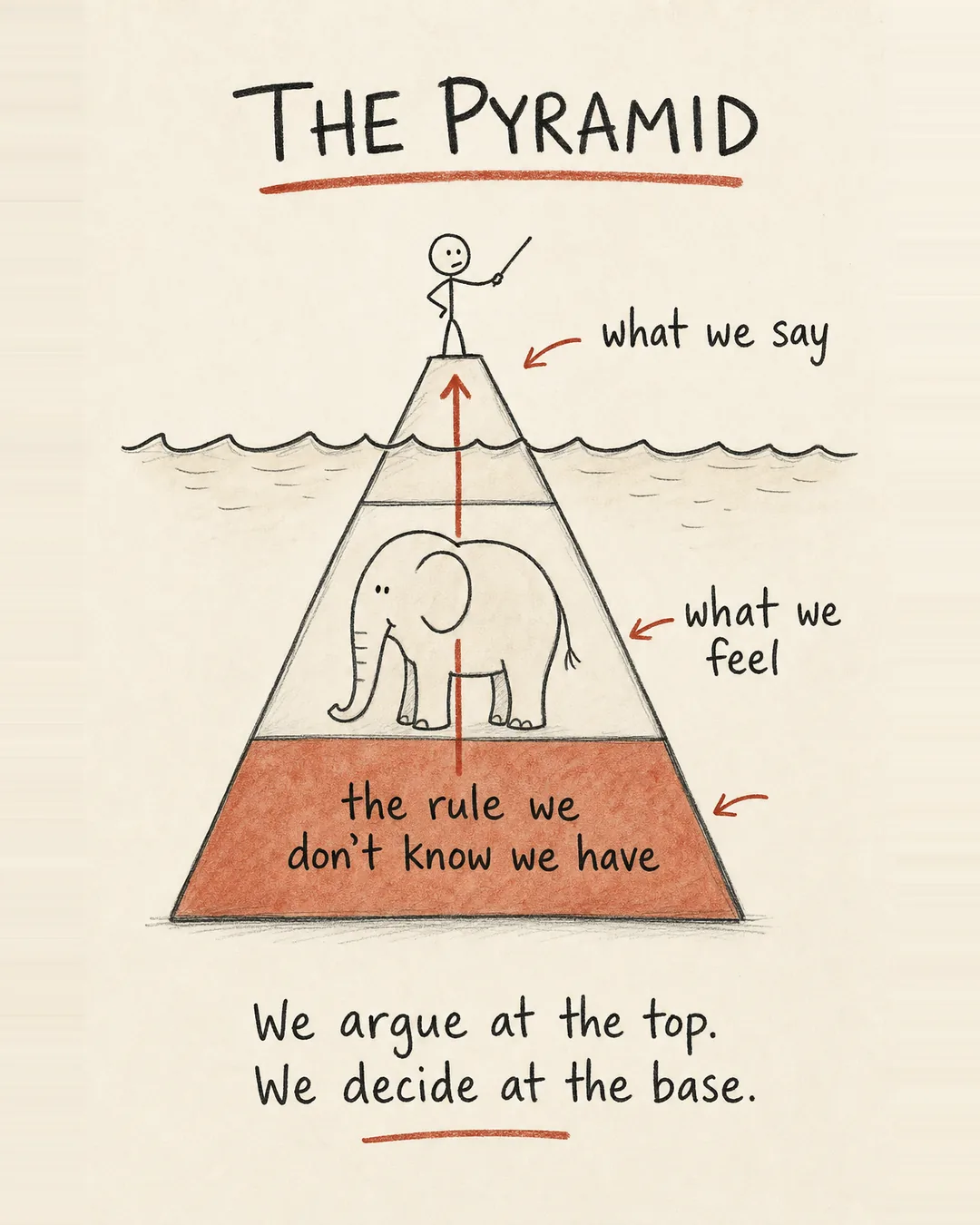
Why a good reason doesn't hold: the REM Pyramid. Three layers. On top, the only one you can hear: the Rationalization ("it's only one Saturday"). Under it, the Emotion that's actually driving. At the base, the MetaMeaning: what saying no would seem to say about you. The choice gets made at the base, not at the top. That's why people say yes to things they don't want, and why a better reason on top changes nothing.
That's why advice, apps and books keep missing. They work on the sentence. Actually, No works on the rule under it, and on having said it.
Knowing why doesn't change it. Trying it while it's live starts to. Research on how people change what they do keeps landing in the same place: understanding helps you pick the right move, but what shifts things is doing the new thing while the old rule is switched on, and seeing that what it predicted doesn't always happen. So before you rehearse your no, you bet on what they'll do. The day after, you check.
Why this is different from one more way to say no
One session in Backstage, our web app, on your phone or computer. You tell it the ask, by voice or text, messy is fine. None of it ever goes to them.
1It holds up a mirror, and asks if you recognise it.
In the first few minutes it plays your own story back, in your words, and points at the move you keep making. "Do you recognise this?" Yes, partly, or no - and no is a fine answer. Then: "Where else do you do this? At work, with family, with friends?" It's a mirror, not a personality test: it doesn't tell you who you are, it shows you one move you make.
Usually: a quiz calls you a people-pleaser. Now you have a label, and you still have the Saturday.
2It reads the ask back to you, and you correct it.
Three possible readings of what happened. You pick one, or say "not quite." It's a reading, not a verdict.
Usually: an article gives you ten polite phrasings, none of them for your sister.
3It goes under the yes.
Down the pyramid, to the old rule that answers before you do, and to the ways the yes keeps itself going. Always as choices, never as blame. And one plain question: what is each yes costing you, month after month?
Usually: you work on the words, or you wait for them to stop asking. The asking goes on.
4You bet on what happens. Then you say your no out loud, three times.
Your no comes from what you found, not from a template, and it doesn't need a reason that beats theirs. First a bet: when you actually say it to them, what do you think happens, and how sure are you, 0 to 10? Then, when you're ready, you say it and it asks again the way they do. Again, with them tired. Once more, with the line that usually gets you. Shorter each time. If tonight isn't the night for a rehearsal, it starts smaller: one move that asks nothing of them, done before the session ends.
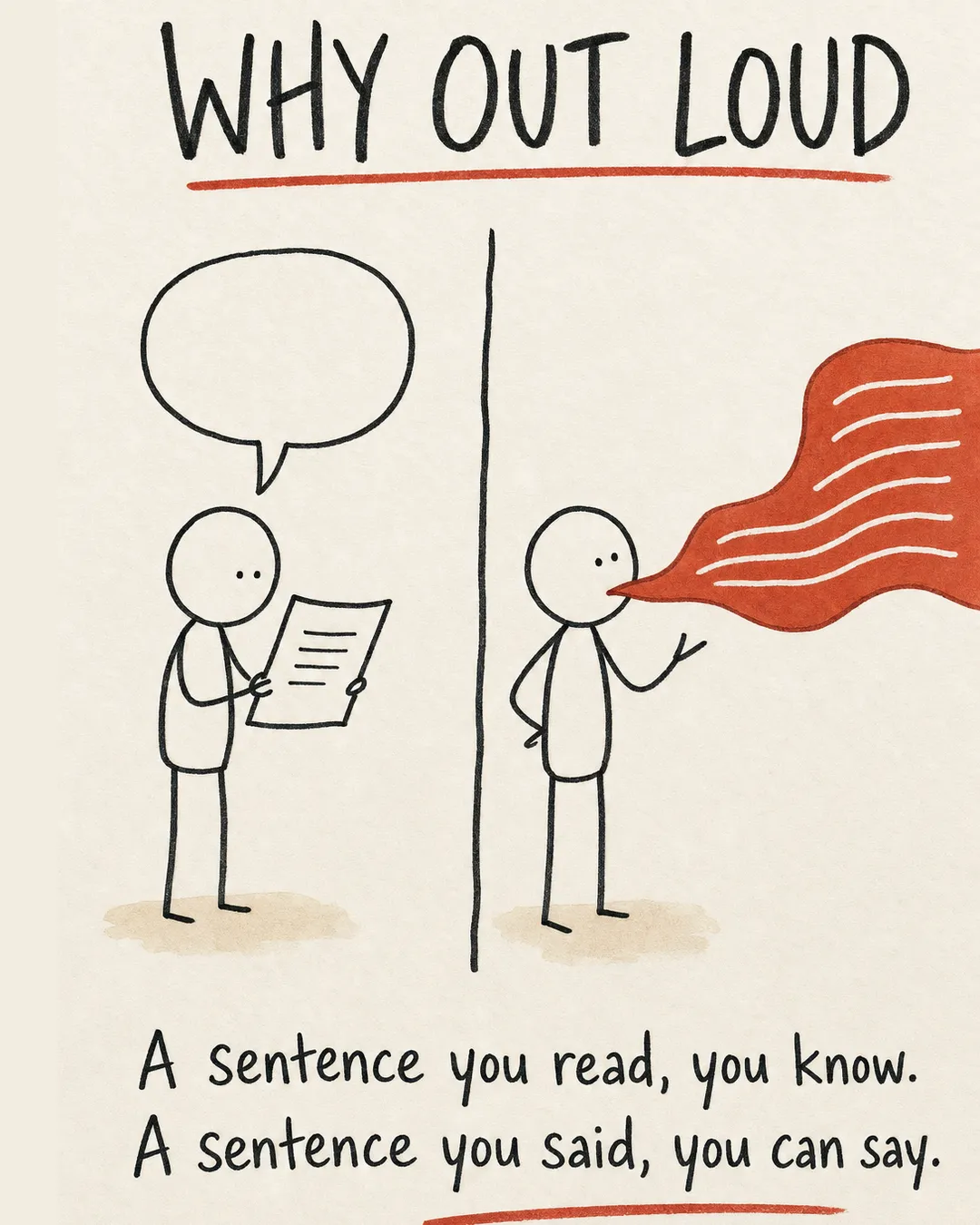
Usually: you've said it perfectly in the car, once. The first time you say it for real is the time it has to hold.
5A day, a plan for the moment, and someone who checks.
You pick the day. If you're going ahead, you leave with a line for the moment itself - "the moment you notice [the first sign], you say: [your no]" - and one for later, in case it doesn't go your way: "That proves nothing about me. It's information about the move, and I try again my way."
The day after, it asks how it went, and whether your bet came true. At day 7 and day 28, one tap: has that moment come back, and how did it go compared to before? It checks whether you did it, not whether you liked it. Then it ends, and sends you back to the real person.
Usually: nothing checks, and the yes that slipped out on the phone becomes the new arrangement.
The CUT: live it once before it counts
Finding the rule explains the yes. It doesn't change what happens in you when the moment comes. That's what The CUT is for.
Calming it down - a breathing exercise, a walk, a playlist - quiets it for a while. It doesn't change the rule underneath. Research on emotional memory suggests a rule like this updates best while it's switched on: when you're inside the moment, not looking at it from outside. So The CUT doesn't calm you down. It takes you back inside the moment.
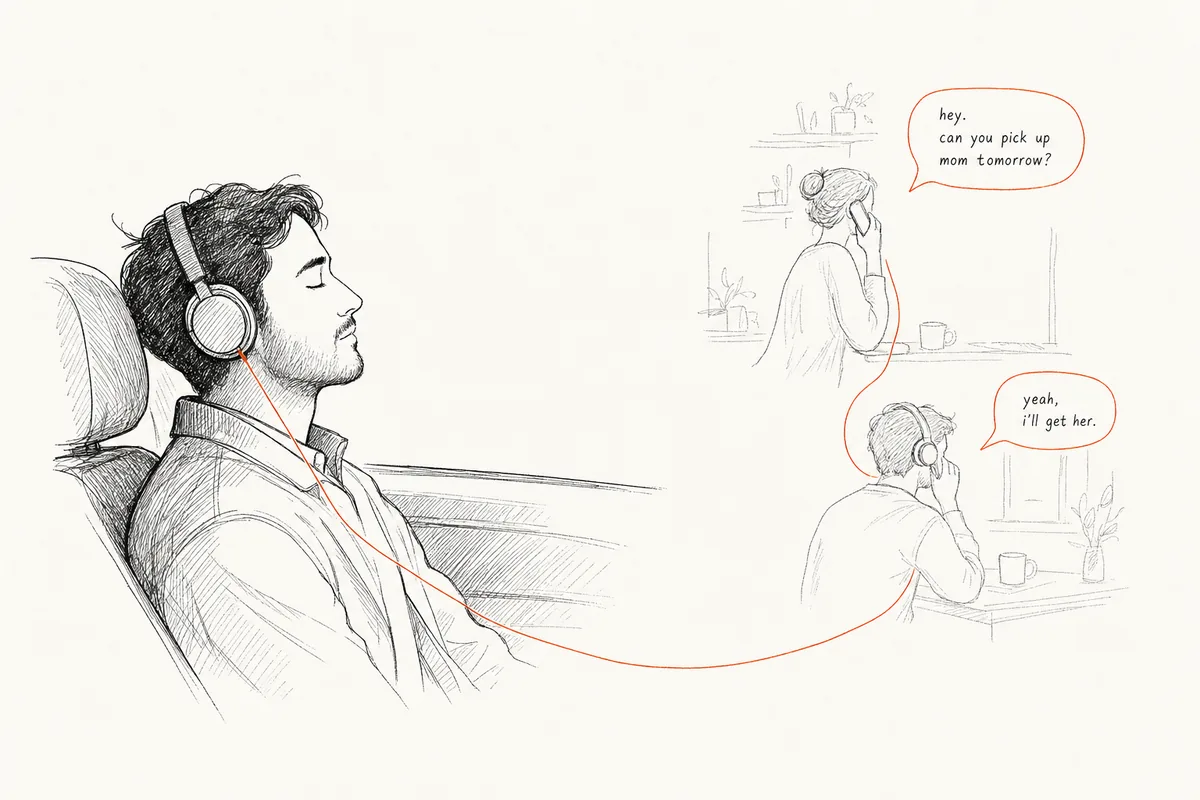
After the session you get a short guided audio, made only from your session: your rule, your scene, your line. It doesn't explain anything - the explaining happens in the session. It takes you, eyes closed, into the moment they ask again, and lets you live the new version once, before the real one.
A few minutes. Nobody else gets the same one. A run-through in your head works best close to the real thing, so if your day is a day or more away, The CUT comes back a few hours before it, with your line.
Usually: you understand the pattern perfectly. Then the moment comes, and understanding isn't what shows up.
Only you have to do this. The person asking doesn't have to agree to anything, or know it happened. In the session it plays them, in text, so you can practice against the version of them you already know by heart.
And if you say no, and nothing changes?
It happens. Sometimes you say it well, out loud, calmly, and they keep asking, or act as if you never said it. The day after, when Actually, No asks how it went, that's one of the answers: "I said it. It won't change."
Then it doesn't send you back for another rehearsal with them. It shows you one card, The Remote, with three buttons:
- Said - your part is done. You showed them where you stand and what it costs you. That stays done, whatever they do with it.
- Theirs - what they do with it. It isn't in your hands, and it never was.
- Mine - your next move. What you give, and to whom. Where your time goes. What you stop waiting for.
Before, how you felt depended on whether they'd finally accept it. From here it depends on what you do - including how close you stay. The asking might not stop. What changes is who holds the remote.
No thanks, I'll keep rehearsing it in the car.
One run, start to finish
An example, written to show how a session goes. Names and details invented.
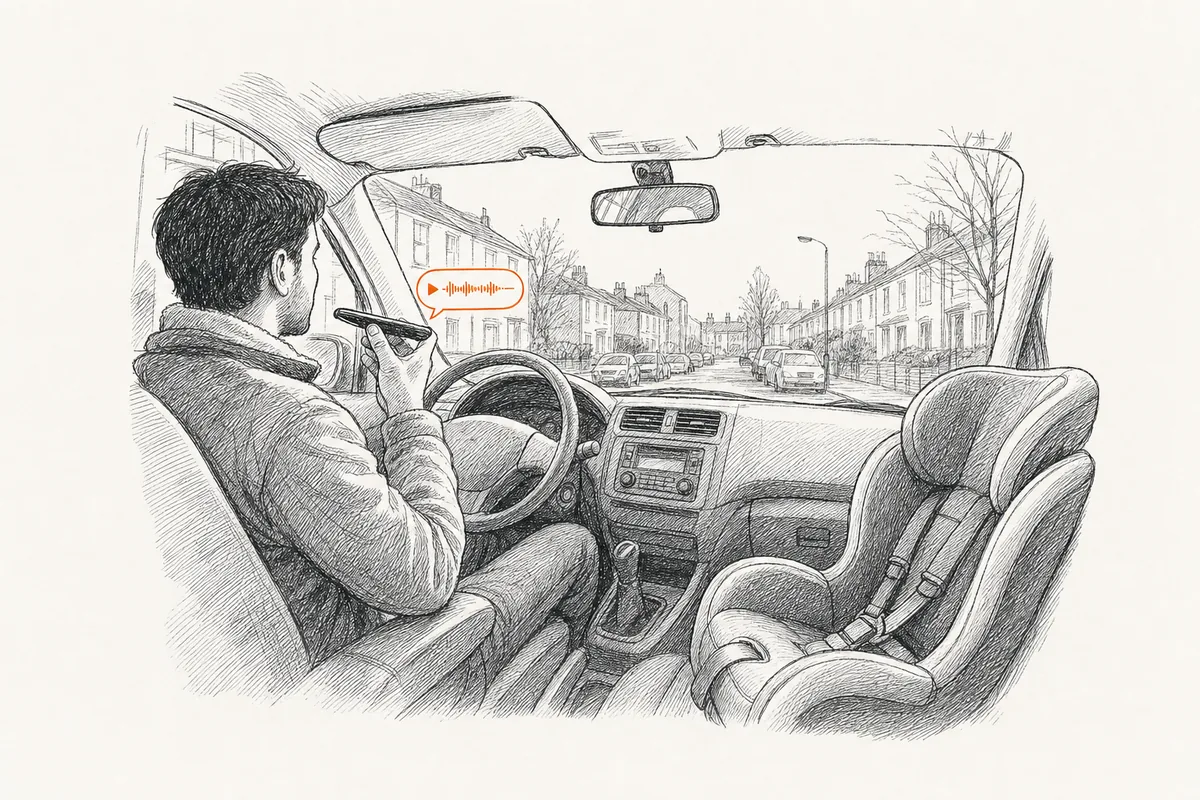
Luca, 34. His sister Chiara.
Who asked you for what? Tell me, voice is fine.
"My sister. Since she went back to work she wants me to take her kids every Saturday. Three months ago I said yes, 'for a while.' It never ended. I don't have Saturdays anymore. And if I try to bring it up she goes: 'come on, you're the only one I can count on.'"
Here's something in your story, in your words: you said yes before you'd decided, and "for a while" did the rest. The yes comes out first, and the deciding never happens. Do you recognise this?
Partly. I do decide. I just decide yes.
Fair. Where else do you do this?
Work. Friends who need a hand moving. Pretty much anyone who asks nicely.
Then it's not only about Chiara. That kind of move has a name here: a script. It runs on its own.
Three possible readings. Which one fits best?
- "For a while" was your no, said halfway. She only heard the yes.
- "You're the only one I can count on" is the line that shuts you up, every time.
- Saturday has become the price of staying the good brother.
Two. That's exactly the line.
Under that, maybe... (a) being afraid of letting her down, (b) the idea that your time counts less than hers, because she has kids and you don't, (c) nothing more, you just need a way to say it.
b. ...yeah.
One reading, take it or leave it: "I can only say no if my reason matters more than hers." And a life of your own doesn't feel like enough of a reason.
Yes.
Then the no doesn't need a reason. It just needs saying. Pick one of these. Before you try it: when you actually say it to Chiara, what do you think happens? a) she gets angry b) she cries c) she stops talking to me for a while
c. Sure, 7 out of 10.
Noted. Now say it to me out loud. I'll push the way Chiara would.
"I love you, and I can't give you every Saturday anymore. One a month, yes."
And how am I supposed to manage? You know I don't have anyone else.
Don't answer the "how do I manage." It's not yours to solve right now. Say the no again, shorter.
"I know. And one a month is what I can do."
Again - this time Chiara is tired.
Fine. I'll figure it out. Like always.
"I know. One a month is what I can do."
Once more - this time Chiara says the thing that usually gets you.
You're the only one I can count on.
"I know. One a month."
There it is, the line, and it isn't a question, so it doesn't need an answer. Three times, fewer words each time, and you didn't explain. That's the one to take to her. When will you tell her?
Scroll inside the screen to read the whole conversation.
He picked Wednesday, on the phone, just the two of them. On Thursday it asked how it went, and then: "You bet she'd stop talking to you for a while (sure 7/10). Is that what happened?" Not quite. She cried. Then she told him she'd been dreading having to ask him every single week. She asked her mother-in-law for every other Saturday. He does one a month. He still feels guilty. That Saturday he went running for the first time since March. The line he kept: "I know. And one a month is what I can do."
That's his Wednesday. Yours will go the way it goes: nothing can decide how they take it. What this run shows is the part that's the same every time. From "I don't have Saturdays anymore" to a no he could say three times, in one sitting, out loud, before it counted.
Under a lot of automatic yeses there's a quiet deal: I get to stay close as long as I'm useful. The no is about one Saturday. What's under it is being her brother without having to earn it. Nobody can promise you that part. The Saturday is where you find out.
No reviews yet. This is new, and we won't make any up.
No thanks, I'll wait for the next ask.
What you get
Actually, No - $15, one time
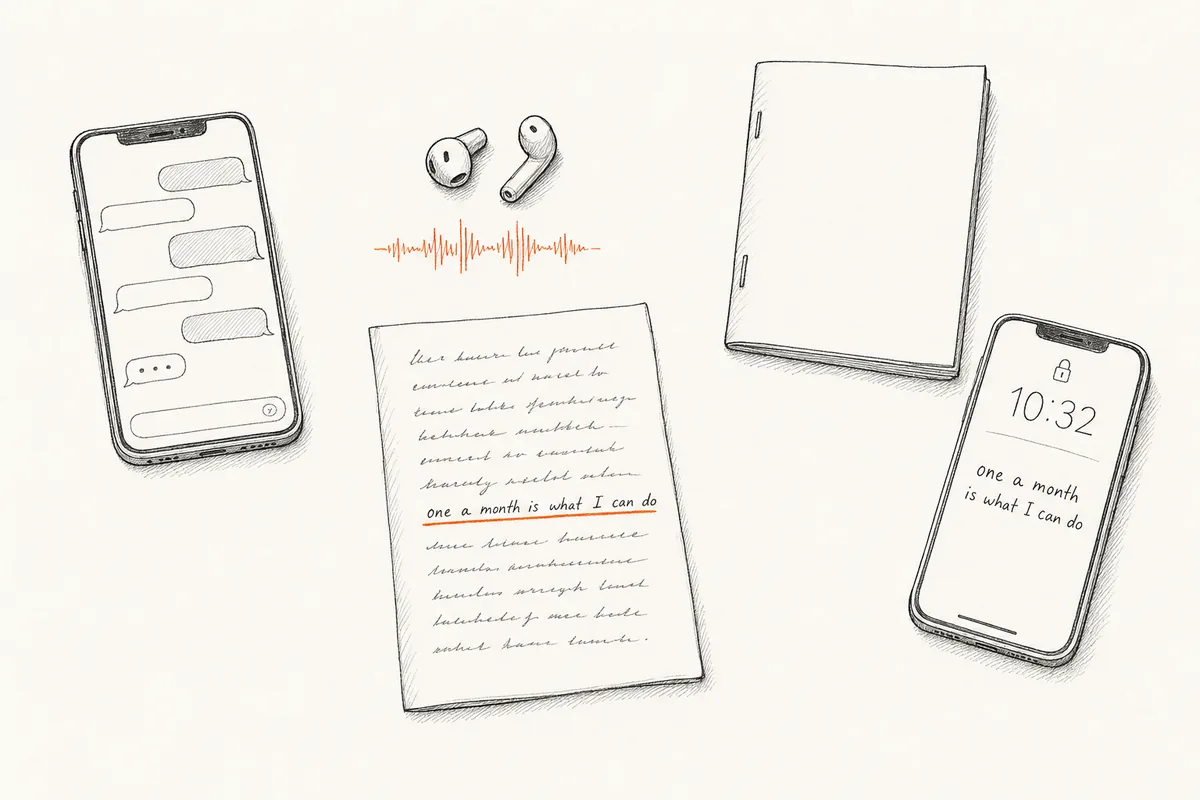
- The session - the steps above: the mirror, the ask read back to you, the rule under the yes, your bet, your no rehearsed out loud three times against a stand-in that pushes back with their usual lines (when you're ready for it), the day and your line for the moment, and the check-in the day after - with a second go if you need one, or The Remote if nothing changes.
- Two quick check-ins - at day 7 and day 28, one tap each: has that moment come back, and how did it go?
- The CUT - a short guided audio made only from your session, to live your no once before they ask for real. If your day is a day or more away, it comes back a few hours before.
- Your Mind Manual - how your script works, and what to do next time. Your scene in writing - what was asked, what the yes was really about, your line, the line for if it doesn't go - with the Field Kit inside: the tools you used in the session, already filled in with your own words, and space for the next ask.
- Totem, a gift - your line, as an image for your phone.
Delivered in Backstage, our web app, on your phone or computer. Nothing to install: you sign in with the e-mail you bought with. You talk by voice or type; it answers in text. The only audio is The CUT. It never contacts the person who asked. "Delete everything" in your Account, or "Delete my data" in the chat, erases what we hold about you, after a typed confirmation and a code.
One session won't make you a different person. It gives you one no you've practised out loud, and a way to practise it again.
You could keep saying "let me think about it" for free, and do it anyway. Or you could have the no ready before they ask again, for $15.
Or you skip it, and the next ask gets the same automatic yes. It's already loaded.
The guarantee: 30 days, everything back
One line to support@actoffscript.com within 30 days, and you get back everything you paid for Actually, No - the session, and Safety Net, Yes on Purpose or its first week if you added them. No form. No questions.
Here's a test only you can run: if after the session you don't have a no you'd actually say out loud to them, that alone is reason enough. It doesn't depend on how they take your no. Nothing can promise that, and we won't.
And what you built stays yours: The CUT, Your Mind Manual, your Totem. Keep them.
It stays with one everyday ask, and it doesn't decide who's right.
FAQ
Is it AI?
Yes - a guide built on the method from years of live one-to-one sessions with dozens of people, available at 11pm when nobody else is. You talk to it in Backstage, our web app, on your phone or computer. It doesn't get tired, it doesn't take sides, and it won't be hurt by your no when you practice it.
Is this a personality test?
No. It doesn't tell you who you are. It shows you what you do - in one scene, in your own words - and you correct it at every step. When it points at a script, it asks if you recognise it, and "no" is a fine answer.
My mother / boss / client doesn't take no for an answer. Will this work for me?
It can't make anyone accept your no. What it does is reply in text with the words and the second ask you tell it they usually use - and it doesn't cave halfway to make you feel better - so you can practice answering that familiar pressure until you can hear it and keep going. Then, the day after, it works with you on what actually happened.
What if I say no and they keep asking?
Then that's what you tell it the day after: "I said it. It won't change." No more rehearsals with them on this one, and nothing gets sold to you at that point. It goes through The Remote with you - what was yours, what's theirs, what's yours from here - and asks for one thing that's yours from now on: what you give, where your time goes, or what you stop waiting for.
Does it have to be family?
It's built for one person whose ask you can't turn down. A parent, a sibling, a boss, a client, a friend who needs money again. One person per session.
Isn't this just assertiveness training?
No. You don't need to learn how to say no. You need to find out why the yes comes out before you do, and practice the no against the kind of push-back that usually takes it back.
What if they get upset?
They might. It can't decide how anyone reacts, and it won't pretend to. A no that upsets someone can still be the right no; that part is yours to weigh.
What if I don't say it after all?
Then you decide not to, and you know why. The day after, it still asks.
How long does it take?
About half an hour for the session. The CUT is a few minutes, whenever you choose.
The next ask is already on its way. Not because anyone planned it, but because nothing has changed since the last yes.
Actually, No
$15one time
- The session
- Check-ins: the day after, day 7, day 28
- The CUT
- Your Mind Manual, with the Field Kit inside
- Totem, a gift
In Backstage, on your phone or computer. Nothing to install.
30 days, everything back. No form, no questions.
Get my no ready - $15No thanks, I'll say yes and deal with it later.